Monday, April 12, 2021

Case


This is Pam Reynolds, an American singer songwriter who had serious brain surgery in 1991. She had an aneurysm on her brainstem, which entailed a very risky surgery. Doctors had to drain the blood out of her head, snip her aneurysm, and then bring her back to life. At the beginning of the surgery, the doctors taped her eyes shut and placed molded speakers in ears, which played very loud clicking sounds that they could use to determine her brain stem activity. Next Pam said she popped out of her own head and found herself looking down at her body on the operating table. She could see about 20 people and heard a drill sound and an electric toothbrush looking tool in the surgeon’s hand. She also heard a female voice say “Her arteries are too small” and another surgeon state “use the other side.”  Then, an article that discusses Pam’s experience states, ““Soon after, the surgeons began to lower her body temperature to 60 degrees. It was about that time that Reynolds believes she noticed a tunnel and bright light. She eventually flat-lined completely, and the surgeons drained the blood out of her head” During this time when Pam was very close to death, she said she could hear the song “Hotel California” playing.

However, Pam’s recollection of her experience is not enough for proof. A year after her surgery, Pam’s surgeon confirmed her account and even stated “From a scientific perspective, I have absolutely no explanation about how it could have happened” (Hagerty). It was confirmed that there were about 20 people in the room, there was a bone saw that looked like an electric toothbrush, there was a conversation about the size of the arteries in her leg, and the doctors were even listening to “Hotel California” just as Pam heard. It’s important to remember that Pam had her eyes taped shut and speakers in her ears, so there was no way for her to see or her these things. Nevertheless, Gerald Worlee, an Australian researcher and NDE debunker believes Reynolds experiences anesthesia awareness, which is when a patient is conscious but cannot move. Dr. Spetzler argued that her Pam’s brain was incapable of forming or retaining memories during most of her operation, so this disproves Worlee’s theory. Pam’s ability to recall and specific details about her NDE and OBE supports the presence of unexplainable attributes of these phenomena.

Hagerty, Barbara Bradley. “Decoding The Mystery Of Near-Death Experiences.” NPR, NPR, 22 May 2009, www.npr.org/templates/story/story.php?storyId=104397005.

Monday, April 5, 2021

Theoretical Frame

The academic framework for this argument is centered around the fact that there is no undeniable scientific reasoning behind all out of body experiences. People who have an out of body experience and are able to report back information that they should have any knowledge about are the key piece of why out of body experiences cannot be explained by the science and medicine of today.

There are two types of situations when out of body experiences can occur; spontaneous or induced. (Newman). Induced OBEs include those that are caused by drugs, sensory deprivation or overload, or strong g forces. This category of OBEs can usually be explained in a medical way, while spontaneous OBEs are less understood. These OBEs can occur during sleep, extreme physical effort, and near death experiences. About 76% of people who have an NDE also report having an out of body experience where they can see and hear events apart from their physical body (Nelson). NDEs and OBEs are heavily linked and they both contain unexplainable elements. My cases which are about Pam Reynolds and the story of Maria and the tennis shoe are great examples of out of body experiences in which the experiencer is able to recall information that they should not know about since they were clinically dead when it occurred. Both a Medical News Today article, which is titled "Out of Body Experiences: Neuroscience or the Paranormal" and a scientific research article "Neuroscience Perspectives on Near Death Experiences" written by Kevin Nelson helped me create the academic frame for my paper. Both of the sources provide information about the mystery of OBEs and the science involved with them.


Works Cited:

Nelson, Kevin. “Near-Death Experiences--Neuroscience Perspectives on Near-Death Experiences.” Missouri Medicine, vol. 112, no. 2, Journal of the Missouri State Medical Association, 2015, pp. 92–98

Newman, Tim. “Out-of-Body Experiences: Neuroscience or the Paranormal?” Medical News Today, MediLexicon International, 19 July 2017, www.medicalnewstoday.com/articles/318464#When-do-OBEs-occur? 

Thursday, April 1, 2021

Literature Review #4

 Visual: 

Citation:

Greyson, Bruce. “Western Scientific Approaches to Near-Death Experiences.” Humanities (Basel), vol. 4, no. 4, MDPI AG, 2015, pp. 775–96, doi:10.3390/h4040775.

Author/ Summary:

This article is written by Dr. Bruce Greyson, a leading expert on near death experiences. His article explores the topic of NDEs as well as their effects and causes. He discusses the invariancy of NDEs across cultures, regardless of cultural expectations. He also found that 10-20% of people who come close to death have an experience with NDE. This article also points out the invariance of near death experiences across people with differing cultures, ages, and beliefs points to either a neurophysiological process in the brain or a mystical domain. It is difficult to research the true causes of NDEs since they have an unpredictable and subjective occurrence. Dr. Greyon also conducted research on the effects of drugs/ medicine on NDEs. His research found that drugs and physical alterations can actually inhibit NDEs, contrary to popular belief. 

Key Terms:

One of the key terms in this article is “ neurophysiological explanation” The article goes into a lot of detail about possible physiological and neurophysiological explanations behind near death experiences. In addition, “out of body experience” is a popular key term in the article. It discusses how OBEs are commonly linked with NDEs. It even states, “The accuracy of out-of-body perceptions during NDEs challenges the conception that they are hallucinations. (Greyson).


Three quotes:

“Moreover, patients who had fevers or were given drugs when near death actually report fewer NDEs and less elaborate experiences than do patients who remain free of drugs and fever. These findings suggest that drugs or physiological alterations in fact inhibit NDEs” (Greyson).

“Although cultural expectations and parameters of the brush with death influence the content of some NDEs, near-death phenomenology is invariant across cultures. That invariance may reflect universal psychological defenses, neurophysiological processes, or actual experience of a transcendent or mystical domain.”(Greyson).

“Although most people who survive close brushes with death report greater appreciation for life, near-death experiencers manifest this in greater zest for life, more intense appreciation for nature and friendship, and living more fully in the moment without concern for the impression they might make, whereas non-experiencers often respond to a close brush with death by becoming more cautious and less likely to take risks” (Greyson).


Value: 

This article is of great value to me because it really helped me to understand near death experiences. Also, Dr. Greyson’s research helped my argument because it found that medicine and drugs actually inhibit near death experiences, rather than cause them which is what most people believe.


Tuesday, March 9, 2021

Visual


This visual displays an out of body experience. Out of body experiences or OBEs are an aspect of near death experiences that are truly unexplainable. They are the one part that both science or medicine cannot explain. A well known example of an OBE is the story of "Maria". She had an NDE during a cardiac arrest in 1977. Afterwards, she told her social worker that while she was being resuscitated, she was floating outside the hospital and saw a tennis shoe on a window ledge, which she described in great detail. The social worker confirmed Maria's story and realized that there was no way Maria could have have seen all the details of the show from her hotel room. I tried to find an image that depicted this case better, but I could not. Instead, this image depicts what an out of body experience simply is.

Thursday, March 4, 2021

Research Blog 5- Revised RQ & Works Cited

 My revised research questions are stated below:

Can near death experiences be explained by psychological/ physiological reasonings or are they actually a glimpse of what happens when we die? If they are not spiritual events, then how can science explain what should be impossible? How can events such as out of body experiences even be possible?

Works Cited:

Scholarly Sources:

Fischer, John Martin, and Benjamin Mitchell-Yellin. Near-Death Experiences : Understanding Visions of the Afterlife, Oxford University Press, Incorporated, 2016. ProQuest Ebook Central, https://ebookcentral-proquest-com.proxy.libraries.rutgers.edu/lib/rutgers-ebooks/detail.action?docID=4545351.

Hagan, John C.. The Science of near-Death Experiences, University of Missouri Press, 2017. ProQuest Ebook Central, http://ebookcentral.proquest.com/lib/rutgers-ebooks/detail.action?docID=4811265

Lichfield, Story by Gideon. “The Science of Near-Death Experiences.” The Atlantic, Atlantic Media Company, 23 Nov. 2015, www.theatlantic.com/magazine/archive/2015/04/the-science-of-near-death-experiences/386231/?utm_source=share&utm_campaign=share. 

Long, Jeffrey. “Near-death experience. Evidence for their reality.” Missouri medicine vol. 111,5 (2014): 372-80. https://www.ncbi.nlm.nih.gov/pmc/articles/PMC6172100/ 

Morse, Melvin., and Paul Perry. Closer to the Light : Learning from Children’s Near-Death Experiences . Villard Books, 1990.

Murray, Craig D. Psychological Scientific Perspectives on Out-of-Body and Near-Death Experiences. Nova Science Publishers, 2009.


Monday, March 1, 2021

Literature Review #3

 Visual:

Citation:

Lichfield, Story by Gideon. “The Science of Near-Death Experiences.” The Atlantic, Atlantic Media Company, 23 Nov. 2015, www.theatlantic.com/magazine/archive/2015/04/the-science-of-near-death-experiences/386231/?utm_source=share&utm_campaign=share. 

Author/ Summary:

This article was written by Gideon Lichfield, a senior editor at quartz and writer for The Atlantic.

The article is a good segway into understanding the topic of NDEs and the research that has been conducted regarding them. Lichfield discusses a majority of the aspects of the NDE field, from the tennis shoe case to the Aware study to the debate over consciousness. He remains unbiased and presents both sides of the debate over NDEs; whether or not they are a real and spiritual event or just a result of brain functions. In addition, he explores well known cases of NDEs, but also presents the opposing argument. 

Key Terms:

One of the key terms of this article is “consciousness”. Lichfield goes into great detail regarding the debate over consciousness or the boundary between life and death. Even if it was proved that NDEs are just a mere result of spasms in the brain, this poses a challenge to the current understanding and definition of consciousness. Another key term from this article is scientific theories. Lichfield explains that what makes a scientific theory just that is that it must be testable. He goes on to describe how the current scientific and medical theories and explanations about NDEs cannot be tested against or for and therefore, cannot be definitive. 

Quotes:

“One of the most celebrated is the story of “Maria,” a migrant worker who had an NDE during a cardiac arrest at a hospital in Seattle in 1977. She later told her social worker that while doctors were resuscitating her, she found herself floating outside the hospital building and saw a tennis shoe on a third-floor window ledge, which she described in some detail. The social worker went to the window Maria had indicated, and not only found the shoe but said that the way it was placed meant there was no way Maria could have seen all the details she described from inside her hospital room.” (Lichfield).

“The results of the Aware study immediately highlight the key problem with this kind of research: it’s very hard to get enough data. Over four years, the study recorded a total of 2,060 cardiac arrests...Of those two, one became too ill to interview further. That left just one subject who could recount what he’d seen in detail” (Lichfield).

“ The patient, a 57-year-old man, described floating up to a corner of the room, seeing medical staff work on him, and watching himself be defibrillated. According to Parnia’s paper, several of the details he described checked out. What’s more, after triangulating the patient’s description with the workings of the defibrillator, the researchers think he may have seen things that happened for as long as three minutes after his heart stopped.” (Lichfield).

Value:

I find this article to be extremely valuable. While it may not be a peer reviewed source, it certainly remains unbiased and factual. Lichfield presents both sides of the debate and discusses widely known cases that support the reality of NDEs.


Literature Review 2

 Visual:


Citation:


Long, Jeffrey. “Near-death experience. Evidence for their reality.” Missouri medicine vol. 111,5 (2014): 372-80. https://www.ncbi.nlm.nih.gov/pmc/articles/PMC6172100/ 

Summary & Author:

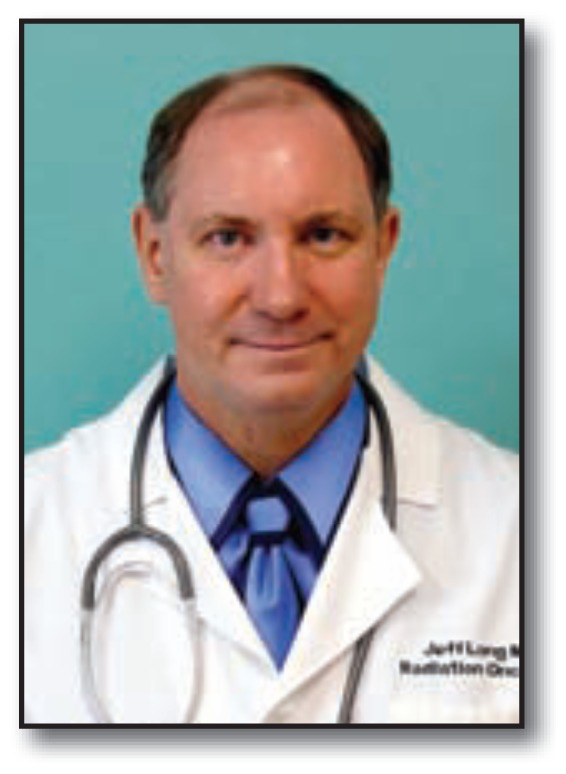
Jeffery Long is an oncologist and world renowned expert on near death experiences. He also established the Near Death Experience Research Foundation. This article describes the nine lines of evidence that support the reality of near death experiences. Some of the evidence includes lucid and organized experiences while clinically dead, out of body experiences, and near death experiences occurring in the blind.Dr. Long uses multiple lines of evidence to prove the idea that near death experiences cannot be medically explained or explained by any known brain function. NDEs are real events that simply cannot be explained by any known medical explanation. 

Key Terms:

One of the key terms of this article is out of body experiences. Nearly 45% of people who have a near-death experience report an OBEs, which can involve them seeing and hearing earthly events from a perspective that is apart from and usually above their physical bodies. Studies have found that near death experiencers can often recount their resuscitations in great details that they normally would not know about. Another key term is brain function. Long discusses how there have been over 20 different explanations of NDEs over the years. However he also mentions that if any of these explanations were plausible or realistic, then there would not be so many. There is just no way to explain NDEs through any known brain functions as of right now. 

Quotes: 

“The combination of the preceding nine lines of evidence converges on the conclusion that near-death experiences are medically inexplicable.” (Long)

“Multiple lines of evidence point to the conclusion that near-death experiences are medically inexplicable and cannot be explained by known physical brain function.” (Long)

“Very young children have near-death experience content that is strikingly similar to older children and adults. This is further evidence that NDEs are occurring independently of preexisting cultural beliefs, religious training, or awareness of the existence of NDE.” (Long)


Value:

This article discusses multiple pieces of evidence that support the reality of near death experiences. In addition, Long points out that there is no scientific or medical explanation behind near death experiences.


Research Blog 10

  Abstract: Near death experiences or NDEs are life changing events that occur when a person is clinically dead or extremely close to death,...