Thursday, March 4, 2021

Research Blog 5- Revised RQ & Works Cited

 My revised research questions are stated below:

Can near death experiences be explained by psychological/ physiological reasonings or are they actually a glimpse of what happens when we die? If they are not spiritual events, then how can science explain what should be impossible? How can events such as out of body experiences even be possible?

Works Cited:

Scholarly Sources:

Fischer, John Martin, and Benjamin Mitchell-Yellin. Near-Death Experiences : Understanding Visions of the Afterlife, Oxford University Press, Incorporated, 2016. ProQuest Ebook Central, https://ebookcentral-proquest-com.proxy.libraries.rutgers.edu/lib/rutgers-ebooks/detail.action?docID=4545351.

Hagan, John C.. The Science of near-Death Experiences, University of Missouri Press, 2017. ProQuest Ebook Central, http://ebookcentral.proquest.com/lib/rutgers-ebooks/detail.action?docID=4811265

Lichfield, Story by Gideon. “The Science of Near-Death Experiences.” The Atlantic, Atlantic Media Company, 23 Nov. 2015, www.theatlantic.com/magazine/archive/2015/04/the-science-of-near-death-experiences/386231/?utm_source=share&utm_campaign=share. 

Long, Jeffrey. “Near-death experience. Evidence for their reality.” Missouri medicine vol. 111,5 (2014): 372-80. https://www.ncbi.nlm.nih.gov/pmc/articles/PMC6172100/ 

Morse, Melvin., and Paul Perry. Closer to the Light : Learning from Children’s Near-Death Experiences . Villard Books, 1990.

Murray, Craig D. Psychological Scientific Perspectives on Out-of-Body and Near-Death Experiences. Nova Science Publishers, 2009.


Monday, March 1, 2021

Literature Review #3

 Visual:

Citation:

Lichfield, Story by Gideon. “The Science of Near-Death Experiences.” The Atlantic, Atlantic Media Company, 23 Nov. 2015, www.theatlantic.com/magazine/archive/2015/04/the-science-of-near-death-experiences/386231/?utm_source=share&utm_campaign=share. 

Author/ Summary:

This article was written by Gideon Lichfield, a senior editor at quartz and writer for The Atlantic.

The article is a good segway into understanding the topic of NDEs and the research that has been conducted regarding them. Lichfield discusses a majority of the aspects of the NDE field, from the tennis shoe case to the Aware study to the debate over consciousness. He remains unbiased and presents both sides of the debate over NDEs; whether or not they are a real and spiritual event or just a result of brain functions. In addition, he explores well known cases of NDEs, but also presents the opposing argument. 

Key Terms:

One of the key terms of this article is “consciousness”. Lichfield goes into great detail regarding the debate over consciousness or the boundary between life and death. Even if it was proved that NDEs are just a mere result of spasms in the brain, this poses a challenge to the current understanding and definition of consciousness. Another key term from this article is scientific theories. Lichfield explains that what makes a scientific theory just that is that it must be testable. He goes on to describe how the current scientific and medical theories and explanations about NDEs cannot be tested against or for and therefore, cannot be definitive. 

Quotes:

“One of the most celebrated is the story of “Maria,” a migrant worker who had an NDE during a cardiac arrest at a hospital in Seattle in 1977. She later told her social worker that while doctors were resuscitating her, she found herself floating outside the hospital building and saw a tennis shoe on a third-floor window ledge, which she described in some detail. The social worker went to the window Maria had indicated, and not only found the shoe but said that the way it was placed meant there was no way Maria could have seen all the details she described from inside her hospital room.” (Lichfield).

“The results of the Aware study immediately highlight the key problem with this kind of research: it’s very hard to get enough data. Over four years, the study recorded a total of 2,060 cardiac arrests...Of those two, one became too ill to interview further. That left just one subject who could recount what he’d seen in detail” (Lichfield).

“ The patient, a 57-year-old man, described floating up to a corner of the room, seeing medical staff work on him, and watching himself be defibrillated. According to Parnia’s paper, several of the details he described checked out. What’s more, after triangulating the patient’s description with the workings of the defibrillator, the researchers think he may have seen things that happened for as long as three minutes after his heart stopped.” (Lichfield).

Value:

I find this article to be extremely valuable. While it may not be a peer reviewed source, it certainly remains unbiased and factual. Lichfield presents both sides of the debate and discusses widely known cases that support the reality of NDEs.


Literature Review 2

 Visual:


Citation:


Long, Jeffrey. “Near-death experience. Evidence for their reality.” Missouri medicine vol. 111,5 (2014): 372-80. https://www.ncbi.nlm.nih.gov/pmc/articles/PMC6172100/ 

Summary & Author:

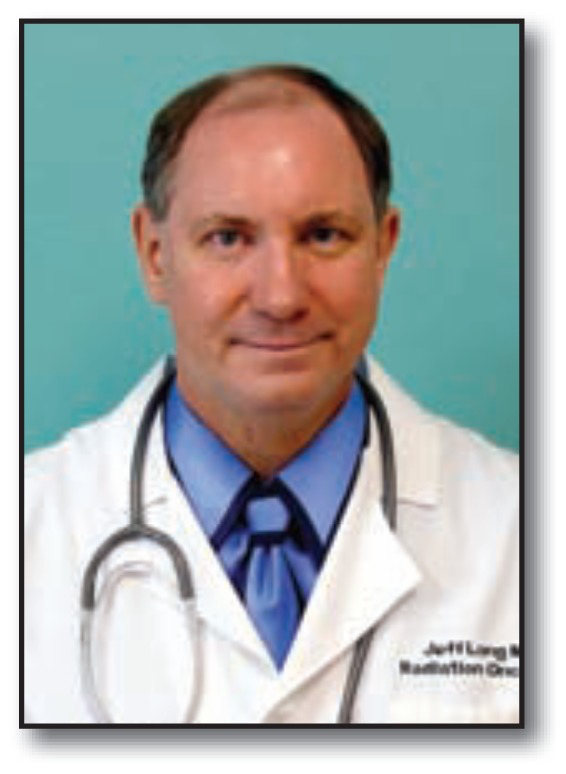
Jeffery Long is an oncologist and world renowned expert on near death experiences. He also established the Near Death Experience Research Foundation. This article describes the nine lines of evidence that support the reality of near death experiences. Some of the evidence includes lucid and organized experiences while clinically dead, out of body experiences, and near death experiences occurring in the blind.Dr. Long uses multiple lines of evidence to prove the idea that near death experiences cannot be medically explained or explained by any known brain function. NDEs are real events that simply cannot be explained by any known medical explanation. 

Key Terms:

One of the key terms of this article is out of body experiences. Nearly 45% of people who have a near-death experience report an OBEs, which can involve them seeing and hearing earthly events from a perspective that is apart from and usually above their physical bodies. Studies have found that near death experiencers can often recount their resuscitations in great details that they normally would not know about. Another key term is brain function. Long discusses how there have been over 20 different explanations of NDEs over the years. However he also mentions that if any of these explanations were plausible or realistic, then there would not be so many. There is just no way to explain NDEs through any known brain functions as of right now. 

Quotes: 

“The combination of the preceding nine lines of evidence converges on the conclusion that near-death experiences are medically inexplicable.” (Long)

“Multiple lines of evidence point to the conclusion that near-death experiences are medically inexplicable and cannot be explained by known physical brain function.” (Long)

“Very young children have near-death experience content that is strikingly similar to older children and adults. This is further evidence that NDEs are occurring independently of preexisting cultural beliefs, religious training, or awareness of the existence of NDE.” (Long)


Value:

This article discusses multiple pieces of evidence that support the reality of near death experiences. In addition, Long points out that there is no scientific or medical explanation behind near death experiences.


Friday, February 26, 2021

Research Proposal

 Working Title: Near Death Experiences: Beyond the Brain or Because of the Brain?

Topic Description:

Near death experiences (NDE) are lucid experiences while unconscious, comatose, or clinically dead. They occur when a person is extremely close to death. However, it should be almost impossible for people to experience such intense and clear visions while they are that close to death. Nearly 1 in 10 people have had a near death experience. They have been reported by all kinds of people, from children to physicians to atheists to scientists. No near death experience is the exact same as another, but they do all share similar characteristics. Some of these similarities include a warm sensation, passing through a tunnel into a light, a lost sense of time, and an intense and positive experience. The debate over NDEs is whether or not they are actually a glimpse into the afterlife. Some of the readings I have found discuss the scientific explanations behind near death experiences; however, they do address the fact that there is still no definite explanation. No one can explain why people who have an NDE also have an out of body experience. About 45% of people who have an NDE report having an out of body experience where they can see and hear events apart from their physical body, which should be impossible. This is what science cannot explain. This topic is related to the paranormal because experiencers can sometimes see and report things that they should have no idea about. 

Research Question: 

Are near death experiences caused by explainable factors or are they evidence of the afterlife? In other words, can near death experiences be explained by psychological/ physiological reasonings or are they actually a glimpse of what happens when we die? If they are not spiritual events, then how can science explain what should be impossible?

Theoretical Frame(s):

A study conducted by Jeffery Long, a world renowned expert on near death experiences, called Near Death Experiences: Evidence for Their Reality discusses multiple pieces of evidence supporting the realness of NDEs. Long describes nine pieces of evidence that show how near death experiences cannot be medically explained. There is a large amount of out of body experiences that cannot be explained by medical reasoning or any known brain function. Also, near death experiences can occur in the blind. They report visions and images that they could have no possible way of knowing about. The study goes on to discuss many more pieces of evidence supporting the reality of NDEs. 

Also, there is a book by John Hagan called The Science of Near Death Experiences, which is a collection of papers written by researchers and physicians with varying perspectives towards near death experiences. I found this book helpful since it presented both sides of the argument and also included some of the physician’s personal experiences. The book is also very evidence based. It discusses possible reasonings behind NDEs but also explains why these reasonings might not be true or all there is to it. In addition, one of the papers in the book is written by Kevin Nelson. Nelson’s paper is titled Neuroscience Perspectives on Near Death Experiences. This paper addresses the explanations behind some of the components of NDEs, such as the feelings of warmth and oneness being caused by serotonin-2a receptors (Nelson 114). However, towards the end of his paper, Nelson points out that near death experiences should be left open to interpretation by the person who experienced it. If one believes it is a spiritual message, then that’s what it should be to them. 

Case(s) or Examples:

Due to the nature of near death experiences, it is very hard to study them objectively. It is also impossible to know whether or not the subject is telling the entire truth; however, there are still some cases that are recounted in specific detail. One example is from a 5 year old blind girl named Marta. In the study conducted by Jefferey Long, he provides a quote from Marta that states, “ I could go anywhere, even to the tops of trees, simply by my intending to go there. I was legally blind. For the first time I was able to see leaves on trees, bird’s feathers, bird’s eyes, details on telephone poles and what was in people’s back yards. I was seeing far better than 20/20 vision.” (Long) Prior to Marta’s experience, she was swimming in a lake and drowned. However, while people were trying to resuscitate her, she had an NDE where she was able to see for the first time. 

Other cases I find to be very interesting are cases dealing with children. When children experience an NDE, they may have a harder time explaining it, but there are still many similarities between their experiences and those of adults. Also, children are not exposed to pre-existing beliefs or even know about NDEs. This furthers the point that NDEs are not caused by subconscious thoughts, but something else. Ultimately, some parts of NDEs can be explained by science, but most of it cannot be medically explained. 


Bibliography

Fischer, John Martin, and Benjamin Mitchell-Yellin. Near-Death Experiences : Understanding Visions of the Afterlife, Oxford University Press, Incorporated, 2016. ProQuest Ebook Central, https://ebookcentral-proquest-com.proxy.libraries.rutgers.edu/lib/rutgers-ebooks/detail.action?docID=4545351.

Hagan, John C.. The Science of near-Death Experiences, University of Missouri Press, 2017. ProQuest Ebook Central, http://ebookcentral.proquest.com/lib/rutgers-ebooks/detail.action?docID=4811265

Long, Jeffrey. “Near-death experience. Evidence for their reality.” Missouri medicine vol. 111,5 (2014): 372-80.

Morse, Melvin., and Paul Perry. Closer to the Light : Learning from Children’s Near-Death Experiences . Villard Books, 1990.

Murray, Craig D. Psychological Scientific Perspectives on Out-of-Body and Near-Death Experiences. Nova Science Publishers, 2009.


Wednesday, February 17, 2021

Literature Review 1

 Visual:


Summary & Author:

John Hagan is a board certified ophthalmologist who has also researched the science behind near death experiences. His book is a collection of papers written by other researchers or medical physicians with varying perspectives on the topic of near death experiences. Hagan and the other contributors develop evidence based research on near death experiences throughout this book. It is estimated that more than 10 million people in the United States alone have experienced an NDE. This book also talks about standards for how to treat a patient who has experienced an NDE as the after effects can be severe. There’s no doubt that near death experiences happen to people; however, the question is why. It's important to note that the book points out that there is still no definitive reason why near death experiences occur, just possible theories. 


Key Terms:


The first key term found in this book is psychological cause/ psychological distress. This is what many of the researchers use to describe the reasoning behind near death experiences. Also, another key term is consciousness. Near death experiences happen when people are unconscious, so the term consciousness refers to when people can describe their experiences. 


Citation:

Hagan, John C.. The Science of near-Death Experiences, University of Missouri Press, 2017. ProQuest Ebook Central, http://ebookcentral.proquest.com/lib/rutgers-ebooks/detail.action?docID=4811265


Quotes:


“These putative neurological mechanisms, for which there is little if any empirical evidence, may suggest brain pathways through which NDEs are expressed or interpreted, but do not necessarily imply causal mechanisms” (Hagan 23).


“Researchers have noted that the value incongruities between NDErs and their families lead to a relatively high divorce rate among NDErs. The effects of an NDE “may include long-­ term depression, broken relationships, disrupted career, feelings of severe alienation, an inability to function in the world, long years of struggling with the keen sense of altered reality.”(Hagan 24).


“The strongest case for the neurophysiologic contribution to NDEs can be made for a borderland of consciousness. A borderland when the conscious states of waking and rapid eye movement (REM) blend, forming a hybrid conscious state.” (Hagan 118).


“In the end, the neuroscience of how the brain participates in near-­ death experiences does not demean their why or spiritual interpretation; these lie in the province of personal faith.” (Hagan 122)


Value:


This book will help me explore my research question because it directly relates to my question and it is very evidence based. Also, some of the researchers contradict and oppose each other, which helps me to derive my own thoughts and theories about the topic.


Friday, February 12, 2021

Blog #3

After reviewing many articles and sources, I have come up with some research questions:

Are near death experiences caused by explainable factors or are they evidence of the afterlife? In other words, can near death experiences be explained by psychological/ physiological reasonings or are they actually a glimpse of what happens when we die? If they are not spiritual events, then how can science explain what should be impossible?

Works Cited

Greyson, Bruce. “Western Scientific Approaches to Near-Death Experiences.” Humanities (Basel), vol. 4, no. 4, MDPI AG, 2015, pp. 775–96, doi:10.3390/h4040775.

Hagan, John C. The Science of Near-Death Experiences . University of Missouri Press, 2017.

Martial, Charlotte, et al. “False Memory Susceptibility in Coma Survivors with and without a Near-Death Experience.” Psychological Research, vol. 82, no. 4, July 2018, pp. 806–818. EBSCOhost, doi:10.1007/s00426-017-0855-9.

Nelson, Kevin. “Near-Death Experiences--Neuroscience Perspectives on Near-Death Experiences.” Missouri Medicine, vol. 112, no. 2, Journal of the Missouri State Medical Association, 2015, pp. 92–98.  


Thursday, February 4, 2021

Blog #2- Scouting the Territory

I have decided to stick with my initial topic idea since I find the topic very interesting. Near death experiences give insight into the unknown questions of the world, so a research project all about them would be fascinating. 

There are many articles and material regarding near death experiences online. Some try to explain the science behind NDE's, while others discuss what a near death experience can reveal about the brain. A Google search of just "near death experiences" brings up plenty of research and readings. From CNN to Wikipedia, there is a multitude of information available about NDEs. While, a search on Google Scholar brings up lots of academic articles regarding near death experiences and what we can learn from them. I do not think I will have any trouble finding research and sources about near death experiences as they seem to be widely studied. 

The Netflix show I recommended is inspired by Leslie Kean's "Surviving Death". After looking on my local library's database, I found this book is available, so I may check it out soon. In addition, a search on Amazon brings up thousands of books about near death experiences and the afterlife. A search on Rutgers Library database brings up over a million results, which includes books, articles, and more. 

After researching this topic for a bit, I realized that I want to discuss either the effects of a near death experience or what the similarities and differences between different individuals' NDEs show. When someone has a NDE, the commonly lose their fear of death and feel a new purpose in life. However, there are also some negatives. Individuals may feel disconnected from their family and friends and reexamine their relationships. In fact, divorce is very common after one partner has a NDE. While this topic is interesting, I am more drawn to examine the similarities and differences in NDEs. Most people describe a warm sensation, no sense of time, and otherworldly experiences. However, each near death experience is unique and can entail different visions. 

Here are resources I found that I believe will be helpful in my research:

https://www.psychologytoday.com/us/blog/understanding-grief/201803/aftereffects-the-near-death-experience 

This article discusses the after effects of a near death experience. This article could be useful if I choose to go this route.

http://www.mit.edu/people/rei/spir-nde.html

This article discusses the variation among near death experiences and what they could signal. 

The biggest controversy I found in the research and articles about NDEs was the question of whether or not near death experiences are something beyond the brain or something in the brain, as in psychedelics. Nevertheless, there is research supporting both sides, so I am excited to research more to form my opinion.

Research Blog 10

  Abstract: Near death experiences or NDEs are life changing events that occur when a person is clinically dead or extremely close to death,...